
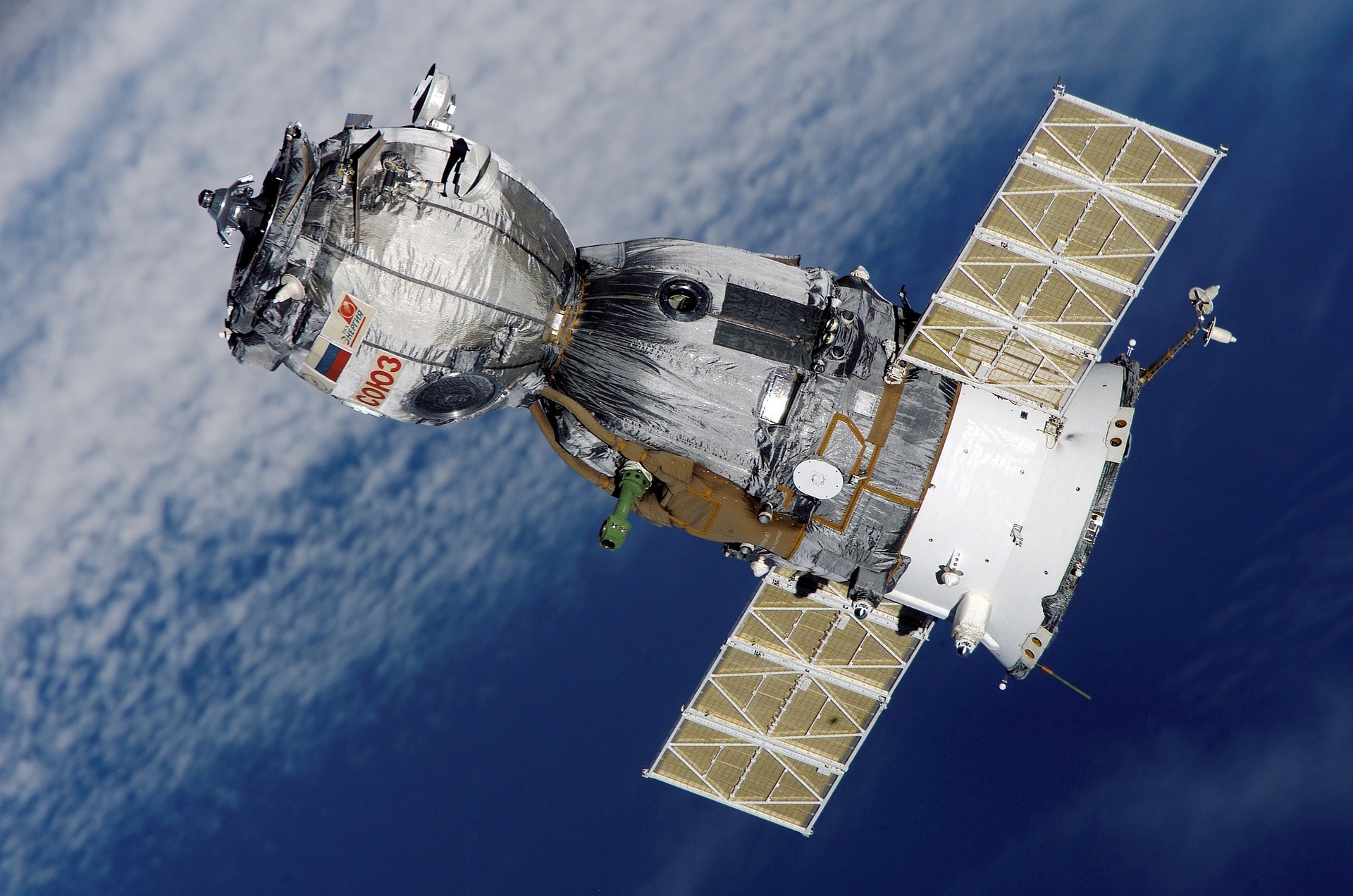
There are roughly 7,000 Starlink satellites in orbit right now. By the time SpaceX finishes what it has already been approved to launch, that number will be closer to 42,000. For context: the total number of satellites launched by all nations combined across the entire history of spaceflight, from Sputnik in 1957 to today, is around 20,000. SpaceX is about to more than double the orbital population of Earth. Alone. Privately.
The story you've been told about why is simple: internet. Broadband connectivity for underserved regions, low-latency links for financial trading, backup communications for disaster zones. All of that is real. None of it is the whole picture.
What almost nobody is discussing is what a 42,000-satellite constellation distributed across low Earth orbit actually does to the electromagnetic environment of the upper atmosphere, and what it could do, deliberately, to the one below it.
Part I: The Atmosphere Is Not a Backdrop
What Happened in February 2022
On February 3rd, 2022, SpaceX launched 49 new Starlink satellites from Kennedy Space Center. Standard procedure. Within 72 hours, 38 of them were gone, not from a technical failure, not from a collision, but from the atmosphere itself. A moderate geomagnetic storm, not even classified as severe by standard indices, had increased atmospheric density at low Earth orbit by over 50%. The satellites encountered drag they weren't designed to survive. They re-entered and burned up.
This event was studied extensively. Multiple peer-reviewed papers followed. What they collectively confirmed is something that reframes the entire Starlink conversation: LEO satellites and the atmosphere are not separate systems. They are coupled. What happens in the ionosphere and thermosphere directly determines what those satellites can do, and what those satellites emit directly affects the ionosphere and thermosphere.
That second part is the one that hasn't made the news cycle.
The Radiation Nobody Mentioned
In 2023, astronomers using the LOFAR radio telescope array published observations of 68 Starlink satellites. What they found was not what they were looking for. The satellites were emitting unintended electromagnetic radiation across frequencies from 110 to 188 MHz, well outside the 10.7 to 12.7 GHz band used for their stated communications function. Broadband. Narrowband. Measurable from the ground. The second-generation satellites, a subsequent study found, emit significantly more of this radiation than the first generation did.
The response from SpaceX was minimal. The regulatory framework for unintended emissions from satellite constellations is essentially nonexistent, as the International Telecommunication Union limits apply only to intended transmissions. Unintended radiation from privately owned spacecraft operating above every nation on Earth sits in a governance vacuum.
Here is what matters about the frequency range: 110 to 188 MHz is within the band that interacts with ionospheric plasma. These aren't signals vanishing into space. They're illuminating the same atmospheric layer that determines regional weather patterns, that military systems use for over-the-horizon radar, and that ionospheric heaters like HAARP deliberately target to study the effects of RF energy on upper atmosphere dynamics.
Nobody designed this. It's a byproduct. Which makes the next question more uncomfortable, not less: if this is what unintended radiation from 7,000 satellites looks like, what does intended radiation from 42,000 look like?
Part II: Starshield, The Version That Doesn't Get Discussed
The Classified Fork
In December 2022, SpaceX quietly confirmed the existence of Starshield, a separate satellite network built on Starlink hardware but developed specifically for U.S. government and intelligence community use. The SpaceX website describes it in three words: "Earth observation, communications, and hosted payloads." That last category is the one worth reading carefully.
A hosted payload is a term of art in the satellite industry. It means a third party's hardware or instrument is integrated into the satellite bus, drawing power, using the communications infrastructure, operating under the host satellite's trajectory and orbital position. The hosted payload's function can be entirely separate from the satellite's stated mission. It doesn't need to be disclosed in the FCC filing. It doesn't need to be described in press releases.
The National Reconnaissance Office signed a contract with SpaceX for Starshield in 2021. The value and scope were classified. The contract confirmed, however, that the NRO, the agency responsible for designing, building, and operating U.S. spy satellites, now has a relationship with a private satellite constellation for capabilities it hasn't described publicly.
We are talking about a privately owned, partially classified network of satellites, orbiting above every country on Earth, with undisclosed payloads, operated by a company that has made no commitment to any international arms control or space security framework. The media coverage has focused almost entirely on whether Starlink terminal prices are competitive.
The Precedent Being Set
What makes this structurally different from previous military satellite programs is private ownership. Government spy satellites are subject to treaty obligations, congressional oversight, and, in theory, accountability through democratic processes. Starshield exists in the space between those structures. SpaceX is not a signatory to any international agreement. Its CEO's personal relationships with heads of state, documented in reporting from multiple outlets, create a dynamic with no historical equivalent: a private individual with operational control over dual-use military infrastructure, accountable primarily to the valuations of a private company.
The geopolitical implications are not theoretical. During the 2022 Ukraine conflict, Musk publicly threatened to restrict Starlink access in ways that would have affected active military operations and then reversed the decision. A private infrastructure owner exercising battlefield leverage in real time. That happened. And it happened with the connectivity layer. Nobody has had that conversation yet about the atmospheric layer.
Part III: The Atmospheric Modification Dimension
What the Patents Say
Weather modification from orbital platforms is not a fringe concept. It is a patented one. US Patent 4402480, filed as a continuation of earlier work from 1979, describes an Atmosphere Modification Satellite, a platform designed to deliver modification agents from orbit with greater precision and fewer operational constraints than aircraft or ground-based systems. The abstract is plain: "The invention relates to meeting the needs of said atmosphere modification via space, rather than previous ground-based experimentation."
Later patents describe cloud seeding delivery systems operable from low Earth orbit, stratospheric aerosol dispersal mechanisms, and RF-based atmospheric heating arrays. These exist in the patent record alongside the same ionospheric heating principles that HAARP has studied for decades. What was science fiction in 1979 is engineering in 2025. And the platform required to operate at scale, thousands of coordinated satellites in low Earth orbit with precision positioning, high-bandwidth communications, and hosted payload capacity, did not exist until now.
The Physics of the Opportunity
The ionosphere sits between 60 and 1,000 kilometres above the surface. Starlink operates primarily at 550 kilometres, well within that range. The ionosphere is not a static layer. It is the electromagnetic interface between the sun and the lower atmosphere, and its state directly influences:
- Jet stream behaviour: thermal gradients between the ionosphere and the tropopause influence large-scale atmospheric circulation patterns, and therefore regional weather systems.
- Precipitation: ionospheric disturbances affect the formation of ice nuclei in clouds, with documented downstream effects on rainfall distribution.
- Radio propagation: the ionosphere acts as a reflector for certain frequency bands, determining the range and reliability of over-the-horizon communication and radar systems.
A constellation operating continuously within the ionosphere, emitting electromagnetic radiation across frequencies that interact with ionospheric plasma, at a scale of tens of thousands of vehicles, represents an atmospheric intervention whether or not it intends to be one. The question of whether that intervention could be made deliberate, shaped, directed, calibrated, is an engineering question, not a philosophical one. And the engineering answer is: almost certainly yes, given sufficient computational modelling of atmospheric response.
The Attribution Problem as the Point
Here is the part that strategic analysts have actually written about, in documents that are publicly available but rarely cited outside specialist circles. Chinese military researchers, in analysis translated and published by CSIS's Interpret: China project, noted the following about Starlink's strategic implications: "When satellite failures occur, it is extremely difficult to accurately attribute the failure to natural or accidental causes, unintended interference, or deliberate aggression."
They were writing about kinetic attacks on satellites. The same logic applies in reverse, and with greater force: when atmospheric disturbance occurs, when precipitation fails over an agricultural region, when ionospheric conditions degrade communications infrastructure in a contested area, attributing that to a satellite constellation rather than natural variation requires data that is not publicly available and analytical capability that almost no government outside the major powers possesses.
The deniability isn't a feature someone added. It is structural to the physics. Which is precisely what makes this the most interesting dimension of the Starlink buildout, and the least discussed.
Part IV: The Governance Gap That Nobody Is Closing
The Outer Space Treaty Doesn't Cover This
The 1967 Outer Space Treaty, the foundational document of international space law, prohibits placing weapons of mass destruction in orbit and establishes that space is the "province of all mankind." It does not address privately owned megaconstellations. It does not address electromagnetic emissions from commercial satellites. It does not address hosted military payloads on civilian platforms. It predates the internet, GPS, and the concept of a reusable rocket by decades.
The ITU, which manages radio frequency allocation, has no binding authority over unintended emissions. The FCC, which licences SpaceX's domestic operations, has no jurisdiction over what happens above the atmosphere. No international body has authority over Starshield's undisclosed payloads. The Environmental Modification Convention prohibits using environmental modification as a weapon of war, but it requires proof of intent, has no enforcement mechanism, and explicitly does not cover peacetime commercial operations.
This is not a grey area. It is an absence. A 42,000-satellite constellation with dual military applications, emitting documented RF radiation into the ionosphere, carrying classified payloads for intelligence agencies, is being built in the largest governance vacuum in human history.
Who Is Watching
The nations watching most closely are the ones with the most to lose from infrastructure they don't control. China has responded by accelerating its own constellation program, the Guowang ("National Network") constellation, authorised for nearly 13,000 satellites. Russia has attempted, with limited success, to build competing systems. The European Union has launched the IRIS² constellation program. The logic is straightforward: whoever owns the orbital infrastructure layer owns a form of leverage that didn't exist before, and the race to not be on the receiving end of someone else's has already started.
What is absent from all of this is a serious international conversation about what these constellations actually do to the shared environment of the upper atmosphere, because having that conversation would require acknowledging capabilities that no government wants to put on the table.
So the conversation stays in the consumer lane. Bandwidth. Latency. Whether you can get a signal in rural Montana. It's a remarkably useful place to keep it.
The Open Question
The 1996 U.S. Air Force research paper "Weather as a Force Multiplier: Owning the Weather in 2025" described, as a near-term military objective, the ability to modify atmospheric conditions with sufficient precision to shape battlefield outcomes, and to do so without attribution. It was written as a projection. It is now the description of an infrastructure that exists.
The satellites are up. The emissions are documented. The military contracts are signed. The governance is absent. The public conversation is about Netflix in rural Idaho.
The question worth sitting with isn't whether this infrastructure could be weaponised. It's whether the distinction between "could be" and "is being" is even knowable from the outside, and what it means to live in a world where the honest answer is probably no.